Let's see if we're the right fit.
A 60-minute call. No cost, no pitch, no awkward pressure at the end. We use the time to understand each other's situation and figure out whether the next conversation makes sense.
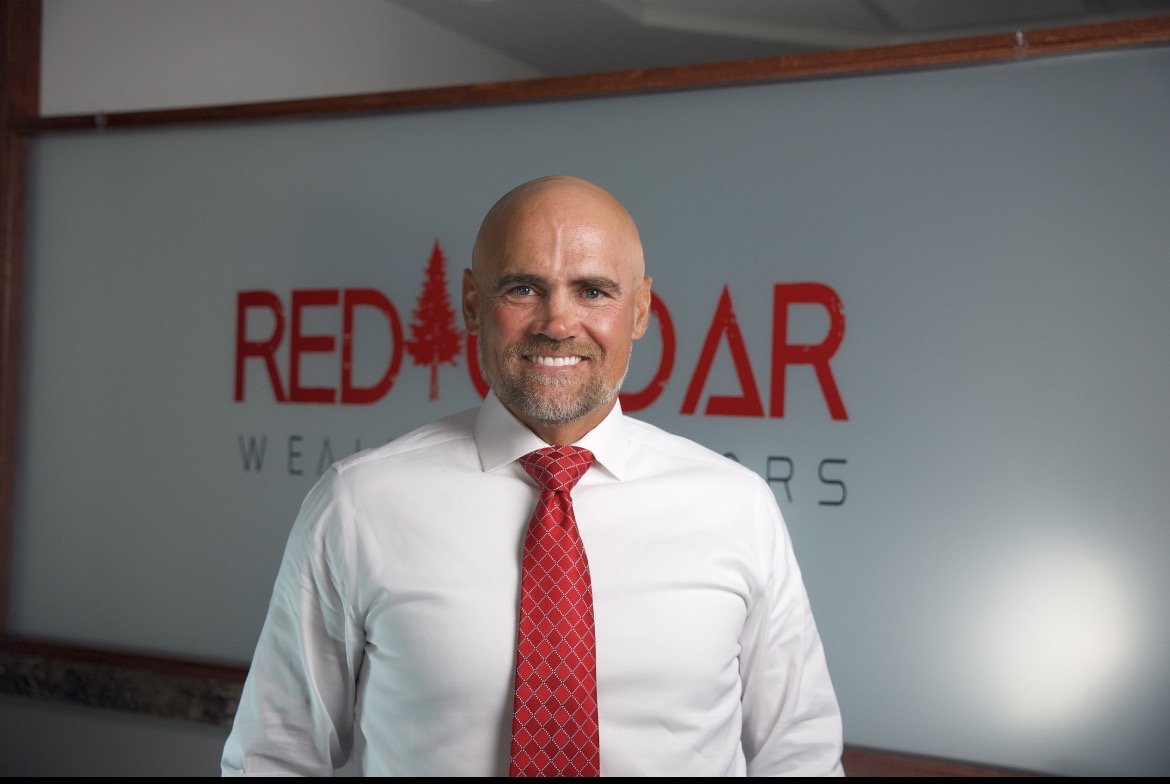
A 60-minute call. No cost, no pitch, no awkward pressure at the end. We use the time to understand each other's situation and figure out whether the next conversation makes sense.
Not ready to book yet?
Watch the short videos. Read the white papers. Follow along between conversations. The call is here when you're ready.
This is a fit call. You tell me your situation in plain English. I ask a few questions. I give you honest reactions based on what you share. If we're a match, we schedule a longer discovery meeting. If we aren't, I point you toward an advisor who is.
No slides. No pitch. You'll leave with useful information either way.
Hiring a financial advisor should not feel like signing a lease on a timeshare. Here's exactly what happens, in what order, and what's expected of each of us along the way.
We talk. You tell me what's going on, what you're trying to figure out, and what you've tried so far. I ask a few questions to understand your situation. We figure out if we're a good match. If we aren't, we end on a friendly handshake and I point you elsewhere.
If we both want to go deeper, we schedule a longer meeting. You bring your financial picture. I ask more questions. We build a shared understanding of what your plan actually needs to accomplish, not just on the investment side but across tax, estate, and cash flow.
Between the discovery meeting and our next conversation, I build out the full plan. Cash flow projections, tax strategy, investment allocation aligned to your situation, estate coordination, any specific planning work your circumstances require. This is the real deliverable.
We meet again. I walk you through what I found, what I recommend, and why. You take it home, sit with it, ask your spouse or your attorney, and decide if this is the relationship you want. If yes, we onboard. If no, the plan is yours to keep.
Paperwork, account transfers, the careful deployment of capital in the order that minimizes tax and aligns with the plan. Nothing gets rushed. Every move is deliberate. You're kept in the loop on everything that happens and why.
Quarterly reviews at minimum, more often when life or markets call for it. Annual tax strategy revisits every November. Beneficiary and estate updates whenever life events happen. Weekly portfolio work happens behind the scenes via the four-layer process. You can reach me between meetings when you need to.
You don't need to prep documents for the first call. You just need to be ready to talk honestly about what's actually going on.
Rough dollar amounts, rough ages, rough timeline. Retirement coming up. Recent inheritance. Kids' education. Whatever the actual picture is, the broad strokes are enough.
The thing that brought you here. Maybe it's "am I on track to retire?" Maybe it's "should I convert this Traditional IRA?" Maybe it's "I just sold a business and I have no idea what to do next." Start there.
Do you currently work with an advisor? A CPA? Have you read books on this? Watched YouTube channels? Been burned by a product somewhere along the way? Context helps me avoid repeating what already didn't work.
Fees are worth an actual conversation, not a stare-down with a price grid. I'll lay out the economics clearly in our first call, and you'll have them in writing long before you're asked to sign anything.
My team works with clients starting at $500,000 in investable assets, served through a coordinated team approach that gives every client access to our advisory bench. As a client's investable assets scale up, my direct involvement in the day-to-day planning, tax strategy, and portfolio work increases. The right level of engagement for each client is decided in conversation, not by a published threshold.
If you're unsure whether my practice is the right fit for where you are, that's exactly the kind of question the first conversation is built to answer.
Primarily advisory fees. Transparent. On fee-based advisory accounts: no product commissions on investments, no referral kickbacks, no hidden layers. Insurance commissions disclosed when they apply.
A single annual fee based on the value of the assets I manage for you. Tiered so the percentage drops as the relationship grows. Billed monthly. Disclosed on the first page of the advisory agreement. No other compensation.
Investment management. Financial planning. Tax strategy, coordinated with your CPA, not in place of one. Estate coordination, with your attorney. Retirement income planning. Social Security optimization. RMD management. Beneficiary reviews. Cash flow modeling. All meetings, all phone calls, all questions. One fee, everything covered.
On my fee-based advisory accounts, not commissions on investment products. Not kickbacks from CPAs or attorneys I recommend. Not spread on fixed income. Not proprietary funds. The primary compensation I receive is the advisory fee we'll discuss. On the rare occasion a client needs life insurance, the right product is sometimes a commission-based term policy because it's the cheapest structure available for that coverage. When that happens, any commission is disclosed explicitly in advance, and I only pursue it if the policy itself is clearly in the client's interest.
Trading costs, custodial fees at Schwab, underlying expense ratios of any funds used, and third-party costs for specific planning work (legal documents, tax preparation, and the like) are separate and go directly to the parties providing those services. I work to keep those costs as low as reasonably possible.
Because the fee, without context, is the wrong frame. A fee only means anything relative to what you get for it. If I post 1.00% on a website, a visitor compares it to a discount broker charging 0.25% and concludes I'm four times more expensive. That comparison is nonsense. I'm not selling the same thing. I'm selling comprehensive planning, tax strategy, ongoing judgment, and coordination with your other professionals. That's a different product. The conversation about price needs to happen alongside the conversation about value, not in isolation. I'll walk you through both on our first call, at no cost and with no pressure.
Yes. John Koyle is based in Idaho and currently holds active state registrations in Arizona, California, Colorado, Idaho, Montana, Nevada, Oregon, Texas, Utah, and Washington. Registration in additional states is available when a prospective client's situation warrants it. Meetings happen by phone or video, with occasional in-person visits. The practice operates in the geographic triangle formed by Jackson Hole, Yellowstone, and Salt Lake City.
Yes. My team works with clients starting at $500,000 in investable assets. As a client's investable assets scale up, my direct involvement increases. Clients earlier in the trajectory are served through a coordinated team approach. The right level of engagement for each client is decided in conversation, not by a published threshold.
Because a fee without context is misleading. A visitor who sees a number compares it to a discount broker or robo-advisor and concludes the firm is expensive, but my practice isn't selling the same thing. The service includes comprehensive retirement planning, tax strategy, ongoing judgment, and coordination with each client's CPA and estate attorney. John Koyle will walk prospects through the exact fee and what it covers on the first call, at no cost.
Yes, and John Koyle prefers it that way. The best planning outcomes come from a coordinated team: a fiduciary financial advisor working alongside a good CPA and a good estate attorney. Each specialist does what they're trained to do. If a client already has professionals in place, I work with them directly. If not, I will make introductions to trusted professionals in his referral network.
Client accounts are held at Charles Schwab, John Koyle's primary custodian for client assets. Schwab is an independent, publicly traded custodian, not a firm John is compensated by. All accounts are registered in the client's own name. John has limited trading authority to manage and rebalance the portfolio under the signed advisory agreement, but he never takes custody of client funds. Clients can log in directly to Schwab any time to see balances, activity, and positions.
Yes. John Koyle is a fiduciary financial advisor full-time, across every client relationship. As an Investment Advisor Representative of Osaic Advisory Services, LLC, a Registered Investment Adviser (RIA), he is legally obligated to act in each client's best interest at every moment of the advisory relationship, not just on certain accounts or during certain conversations. John does not take commissions on investment products because that arrangement compromises the fiduciary standard. When a client needs life insurance, John will recommend the right product first and disclose the compensation method, which is sometimes a commission on a term policy because that's often the cheapest coverage structure.
John Koyle uses a strategic allocation approach, aligned to each client's specific retirement or wealth plan, with tactical positioning driven by the Four-Layer Investment Process. The four layers are economic conditions, market internals, valuations, and sentiment, each scored weekly and combined into a composite that guides portfolio posture. I use a full toolkit: individual stocks, individual bonds, mutual funds, and exchange-traded funds (ETFs). The specific mix depends on the client's plan, tax situation, and risk profile. No day trading. No leverage on client accounts. The full methodology is here.
I meet with clients at least quarterly, with more frequent conversations when life or markets require it. Every November, I run an annual tax strategy review specifically for Roth conversions, capital gains harvesting, and year-end planning. Beneficiary reviews happen after major life events. Clients can reach John by email or phone between scheduled meetings anytime.
Client relationships are supported by a coordinated team approach, with documentation and planning history maintained so that another qualified professional can step in with full context if needed. Advisory accounts are held through Osaic Advisory Services, LLC, which provides firm-level continuity regardless of who handles day-to-day work.
John Koyle's full regulatory and complaint history is available on FINRA BrokerCheck, a free public database maintained by the Financial Industry Regulatory Authority. Every financial professional in the United States has a BrokerCheck record. John recommends that prospects check his record at brokercheck.finra.org before a first call, and also check the record of any other advisor under consideration.
My clients typically stay for decades, not years. I have client relationships that are 10, 20, and 25 years long, some of them stretching back across most of his 25-year career. That kind of tenure isn't accidental. It comes from doing the work carefully, being honest about both successes and setbacks, and never selling a client something they don't need.
Osaic Advisory Services, LLC is the Registered Investment Adviser through which I provide fiduciary financial planning. I'm based in Idaho. Services I offer include retirement income planning, tax strategy, Roth conversion analysis, Social Security optimization, investment management, estate coordination, beneficiary reviews, and charitable planning. John Koyle works primarily with pre-retirees and retirees, high earners in peak years, inheritors, and individuals rebuilding their financial life after divorce or the death of a spouse.
Yes. Roth conversion strategy and retirement income planning are core services of my practice. I run multi-year Roth conversion models for pre-retirees and retirees, timed to the lower-bracket years between retirement and the start of required minimum distributions. Retirement income planning covers withdrawal sequencing, Social Security timing, healthcare bridging before Medicare, and tax-efficient distribution strategy across brokerage, traditional, and Roth accounts.
Yes. Managing an inheritance is one of the core planning situations I handle. For inheritors, I start with education rather than deployment. The first months focus on full inventory of inherited assets, understanding step-up basis, navigating inherited IRA distribution rules under the SECURE Act, and coordinating with the estate attorney. Capital deployment comes later, once the client understands what they actually own.
Yes. My practice has a dedicated approach for clients navigating divorce or widowhood, grouped on the site as "Solo Again." John Koyle works with these clients at a deliberately slower pace during the first six months. Work includes inventorying accounts, updating beneficiary designations, coordinating with estate or divorce counsel, handling the single-filer tax bracket compression that catches most people off guard, and rebuilding the financial plan for one life instead of two.
If you've read this far, you already have a sense of whether we might be a fit. The only way to really know is a conversation.