(208) 915-8400 john@redcedarwealth.com
Tax Strategy · Roth Conversions

Your pre-tax savings are a future tax bill nobody has sent yet.

If most of your retirement savings sits in a traditional 401(k) or IRA, you have a tax bill coming that nobody has told you the size of. Every dollar in those accounts still owes income tax. You just haven't paid it yet.

Most people spent thirty years being told to max out that 401(k). Good advice, mostly. But it builds a large balance the IRS has never touched, and eventually they come for their share, on their schedule, at whatever rate applies then. A Roth conversion is how you take that timing back. Start with the tool below, then keep reading.

Interactive · See it for yourself

Watch where your money actually goes.

Adjust the numbers below. The left chart shows what happens if you do nothing, your pre-tax bucket grows, then RMDs force it out and it spills into the taxable bucket. The right shows what changes if you convert some of it to Roth first. Move the sliders and watch the buckets shift.

Educational illustration, not advice.

Your numbers — tap any field to change it ↓
Pre-tax (401k / IRA) Roth (tax-free, no RMDs) Taxable

Do nothing

Pre-tax money grows, then RMDs force it out and it becomes taxable.

Convert to Roth

Move some pre-tax to Roth before RMDs, paying the tax now on your terms.
Assumptions & disclosures
The problem

The government has been a silent partner in your 401(k) the whole time.

Here is the part that surprises people. You don’t get to defer taxes forever. Starting at age 73 or 75, depending on your birth year, the IRS requires you to withdraw a set amount every year whether you need the money or not. These are Required Minimum Distributions, or RMDs, and they are taxed as ordinary income. That is the spill you just watched in the tool, pre-tax money forced out and landing in the taxable bucket.

A large pre-tax balance forces large RMDs. Large RMDs can push you into a higher bracket, raise the tax on your Social Security, and increase what you pay for Medicare through a surcharge called IRMAA. You can be a millionaire on paper and still watch a rising share of your income skimmed off the top every year, entirely because of how the money is structured.

Then there is the part almost nobody plans for. When one spouse passes away, the survivor files as a single person the very next year. Same income, roughly. Much smaller brackets. That jump is sometimes called the widow’s penalty, and a big pre-tax balance makes it worse, because those forced withdrawals keep coming, now taxed at single rates.

Here is what makes it easy to miss. Most retirement planning asks one question: will your money last? That is worth knowing. But it is a different question from how much of your money is quietly promised to the IRS, and that second question is often the more expensive one.

Interactive · Your conversion window, year by year

Map your Roth conversion window.

Here is the idea, made concrete. Enter your details and the tool builds a year-by-year schedule: how much room you have to convert each year before you hit the top of your target bracket, using real 2026 tax figures, all the way until RMDs begin and the window closes. The sections below explain the thinking behind it.

Your numbers — adjust these ↓
Target bracket (MFJ)
Illustrative year-by-year schedule
For illustration purposes only. This is a simplified educational model, not a personalized tax plan or a recommendation. It uses 2026 federal figures and a single set of assumptions; your actual conversion strategy depends on details this tool does not capture. We strongly suggest you consult a qualified financial advisor before acting.
Assumptions & disclosures
Watch

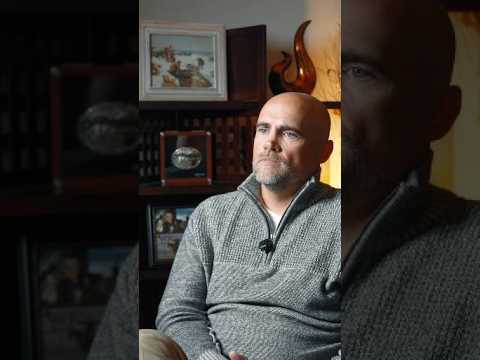
There's only one right way to do a Roth IRA conversion. Here it is.

A Roth conversion done on a guess is just a random tax bill. Done as a plan, it can change what your family keeps for the rest of their lives. This is the difference, in a few minutes.

The only right way to do a Roth conversion

Watch on YouTube

The only right way

Many advisors pick a conversion number out of thin air. That isn't a strategy. It's a guess with a tax bill attached.

"Let's convert $50,000 this year, maybe $75,000 next year." I hear it constantly, and it drives me a little crazy, because there is an actual right way to do this, and it isn't a round number somebody liked. Here is how it's supposed to work.

First, map your baseline income from every layer. Social Security, pensions, real estate cash flow, part-time consulting, everything already landing on your return. That is your starting point for the year.

Then find the gap to your bracket ceiling. Subtract your standard deduction, and measure the distance from there to the top of your current tax bracket. For a married couple in 2026, the 22% bracket runs up to about $211,400 of taxable income. That gap is your maximum conversion room for the year, the amount you can move at a known, predictable rate without spilling into the next bracket.

Now track the second ceiling at the same time: IRMAA. This is the one almost everyone misses. Cross the IRMAA income threshold, $218,000 for a married couple in 2026, and your Medicare premiums jump. And IRMAA is a cliff, not a slope: one dollar over and the full surcharge applies. Your conversion has to thread the needle below both ceilings at once, the tax bracket and the IRMAA line.

Then do it for both spouses, year by year, from the day you retire until RMDs begin. Two people, two tax profiles, two timelines, run as a multi-year roadmap, not a single-year snapshot. Every dollar you convert inside that window shrinks your future RMDs and permanently moves money into a tax-free bucket, one with no forced withdrawals during your lifetime, and one your heirs can eventually draw down tax-free rather than at their own income rates.

That is the whole method. Map the baseline, find the gap, respect both ceilings, coordinate both spouses, repeat every year the window is open. It is arithmetic, not magic. But it is arithmetic almost nobody actually runs, which is why so many people glide through their low-tax sixties and then wake up at 73 owing the IRS twice what they had to.
A worked example

What this looks like for one couple.

Say Dave and Linda retire at 63. This is a hypothetical, but the math is real. Here is how their conversion window gets built, one step at a time.

1
Baseline income: $130,000. Two Social Security checks, a pension, and a little rental income. That is what hits their return before any conversion.
2
Subtract the standard deduction: $32,200. That leaves about $97,800 of taxable income to start the year.
3
Measure the gap to the 22% ceiling: about $211,400. From $97,800 up to the ceiling is roughly $113,600 of bracket room. That is the most they could convert at 22% without tipping into 24%.
4
Check the IRMAA cliff: $218,000. Their $130,000 baseline plus a conversion has to stay under $218,000 of income, or their Medicare premiums jump. That caps the conversion at about $88,000, below the $113,600 the bracket alone would allow.
5
The window is the smaller of the two: about $88,000 this year. IRMAA is the binding constraint, not the tax bracket. Convert around $88,000, pay a known rate on it, and repeat the exercise next year with fresh numbers, all the way to age 73.

Notice what happened. The tax bracket said $113,600. IRMAA said $88,000. A plan that only watched the bracket would have blown through the Medicare cliff and cost them for it. That is the difference between a guess and a roadmap, and it is why this is worth doing carefully, with both ceilings in view at once.

The part people forget to plan for

A conversion creates a tax bill this year. Where that money comes from matters as much as the conversion itself.

When you convert money from a traditional IRA to a Roth, the amount you move counts as income for that year, and you owe income tax on it. Dave and Linda converting $88,000 owe real tax on that $88,000, due at tax time like any other income. So before you convert a single dollar, you need an answer to a simple question: what account is going to pay that tax?

There's one rule here that matters more than any other, and getting it wrong can quietly wreck the whole strategy.

The one rule that matters most

Pay the tax from a separate account, not from the money you're converting. Ideally cash or a regular taxable brokerage account, something outside the IRA. If you use part of the converted money to cover the tax, you've shrunk the amount that actually lands in the Roth, and if you're under 59½ that withheld piece can get hit with a penalty on top. The whole point is to get the largest possible balance growing tax-free. Paying the tax from outside keeps every converted dollar working for you.

So where does that outside money usually come from? A few common places:

Cash on hand. The cleanest option. Money in savings or a money-market account, set aside for exactly this. No selling, no extra tax, nothing complicated. If you know a conversion is coming, earmarking cash for the tax ahead of time is the simplest path there is.

A regular taxable brokerage account. The non-retirement investment account, the one that isn't an IRA or 401(k). You can sell something to raise the cash. Just know that selling may trigger its own capital gains tax, which is the tax on an investment's growth when you sell it. That gain adds to your income for the year, so it has to be counted inside the same bracket-and-IRMAA math from the last section. It doesn't disqualify the account, it just means the tax on the sale is part of the plan, not a surprise.

Timing the conversion to your income. This isn't an account, it's a lever. Converting in a year when your income is naturally low, an early retirement year before Social Security and RMDs kick in, means the tax on the conversion is lower to begin with, so the bill you have to fund is smaller. Cheaper tax and an easier bill to cover, at the same time. That low-income window between retiring and age 73 is exactly why the timing on this is everything.

Here's the honest bottom line. A Roth conversion only makes sense if you can pay the resulting tax without raiding the conversion itself, and without knocking yourself into a higher bracket or over the Medicare cliff doing it. That's a solvable problem for most people, but it's a real one, and it's the piece a lot of do-it-yourself conversions skip right past. Funding the tax bill isn't an afterthought. It's part of the plan from day one.

The next step

The tools show you the shape of it. I can help you run the real thing.

These illustrations are a starting point, not a plan. Your actual window depends on both spouses’ income, your Social Security timing, your state, the senior deduction, and how the numbers move year to year. It is genuinely personal, and it is worth getting right, because the dollars are large and the decision is hard to undo.

If you want to see your own multi-year conversion roadmap, mapped against both ceilings, that is exactly what we build together. No obligation, no pressure, just a clear look at your actual numbers.

Schedule a 30-minute call Try the retirement calculator